Methodology. Not software.
The Value Delivery Journey
EduFlow360 is built on decades of Finance and Lean Operational Management experience — now applied to the education sector.
We don't sell a platform. We embed into your institution, map the friction, and build the coordination layer that makes your existing systems perform as one. Every engagement follows the same proven seven-step journey — from the first conversation to a self-improving operating model.
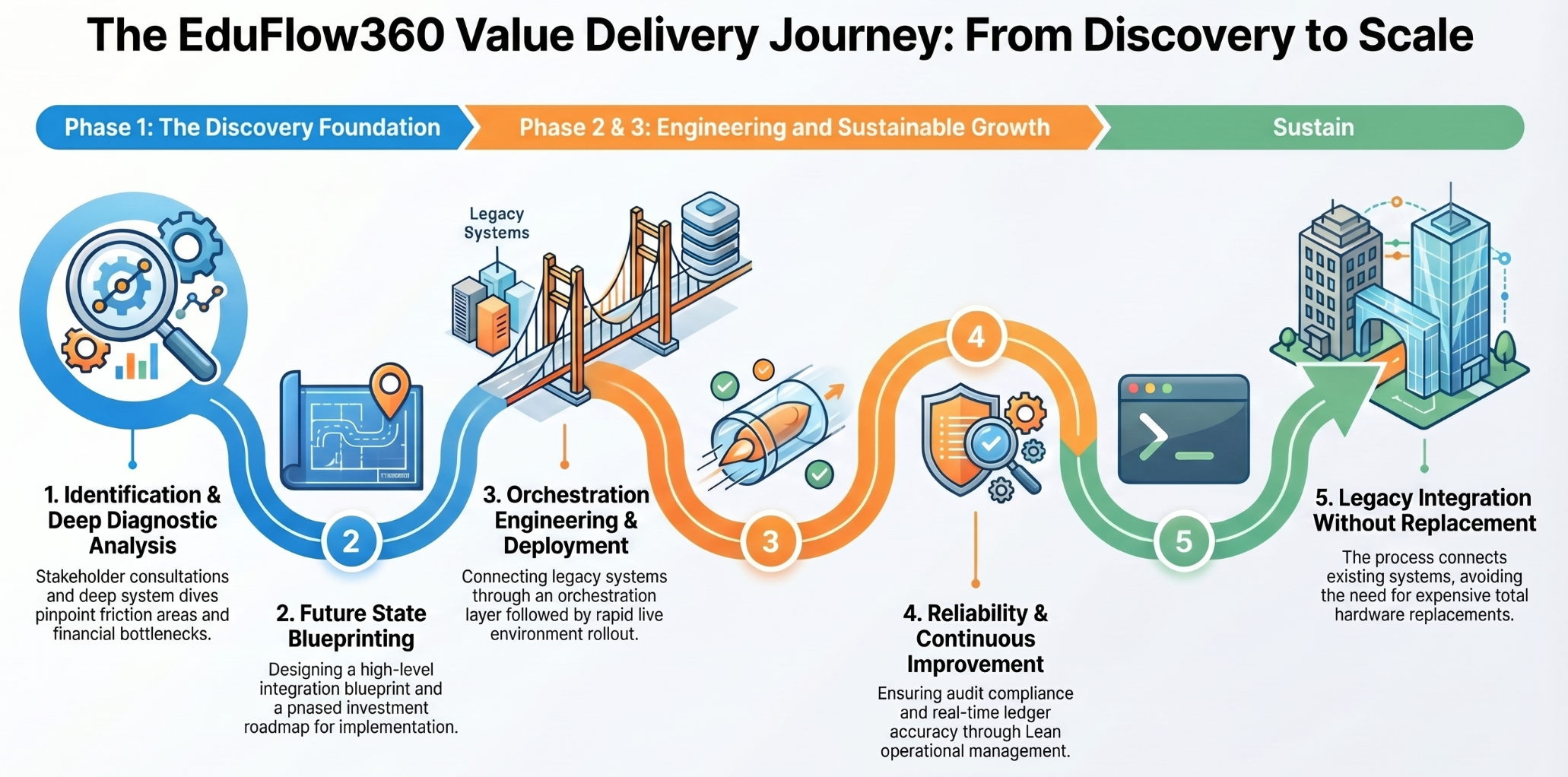
Steps 01–03
Discover
Steps 04–05
Build
Steps 06–07
Sustain
Initial Consultation
We begin not with a proposal — but with a question: where does effort disappear? Through structured discovery with key stakeholders, we pinpoint the critical friction areas before anything else is considered.
Deep System Analysis
A deep-dive into current data flows, system dependencies, and financial bottlenecks. We map what exists, what connects, and — critically — what doesn't, before recommending anything. The diagnostic is the foundation everything else is built on.
Integration Blueprint
A high-level orchestration blueprint and a phased investment roadmap — designed around what you already have, not what we want to sell you. Institutions leave this step with a clear picture of the future state and what it will take to reach it.
Orchestration Engineering
Engineering the coordination layer that sits above your existing systems — connecting SIS, LMS, ERP, and financial platforms without replacement or disruption. The orchestration layer translates events in one system into coordinated actions across all others.
Live Environment Rollout
Rapid, structured deployment into the live environment. Change management, staff enablement, and parallel-run protocols are built into delivery — not added as afterthoughts. We don't leave until the orchestration holds under real operational load.
System Reliability
Ensuring operational integrity, audit compliance, and real-time financial ledger accuracy across all connected systems. The orchestration holds — under load, under change, under regulatory scrutiny. Stability is not assumed; it is verified and documented.
Lean Operational Management
Lean principles embedded into daily operations — not as a one-off workshop, but as a governance discipline. Yield optimisation, process ownership, and a self-improving operating model that compounds results over time. This is where institutions stop depending on us and start owning their own momentum.
Ready to begin?
The first step is a conversation.
Tell us about your institution and the friction you're experiencing. We'll respond with a perspective, not a proposal.
Engage with Us